Which Proxy Is the Strongest? Residential vs SOCKS5 vs VPN (Real-World Guide)
When people say “strongest proxy,” they usually mean: hardest to flag, stable, and good for real work. The truth is: strength depends on your use case — but there is a practical ranking based on real-world detection and stability.
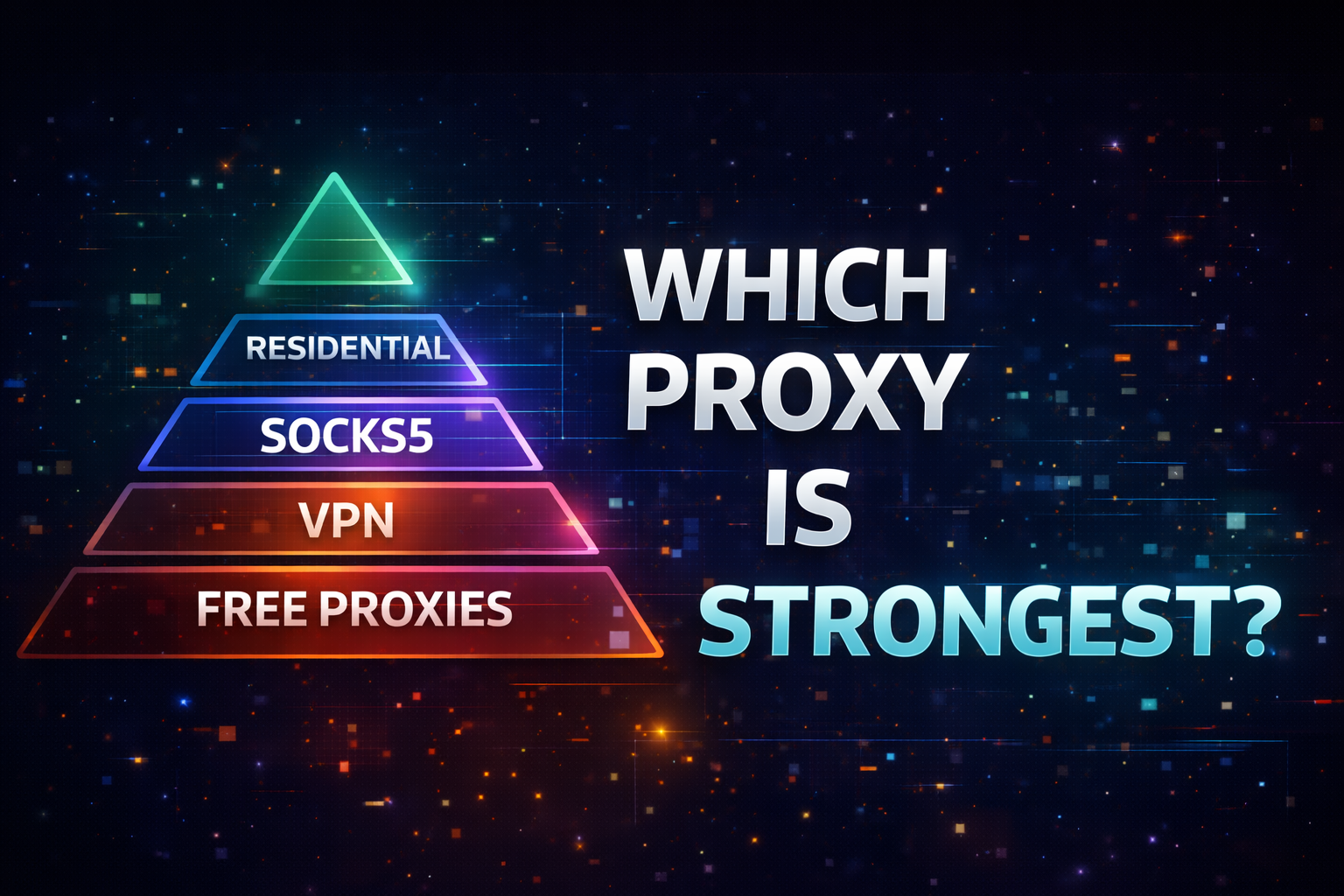
Quick ranking (general)
- Residential (hardest to flag, usually costly)
- Clean SOCKS5 (fast + flexible + affordable when IP is high quality)
- VPN (often shared ranges; sometimes flagged quicker)
- Free proxies (almost always unstable/blocked)
Visual: Proxy “strength” pyramid
What should you choose?
- If you want the best balance of speed + flexibility + cost for tools and browsers, clean SOCKS5 is a strong option.
- If you need a full clean workspace and long stable sessions, go for RDP.
- If you only need basic browsing, VPN can work — but shared ranges may get flagged depending on the platform.
Recommended next step
View SOCKS5 plans for clean routing, or RDP plans for a full remote Windows desktop setup.